A few days removed from the devastating fire in Ovid that destroyed much of downtown the gravity of the situation is only beginning to sink in. What started as a single tragedy has quickly turned into a long-term crisis. For those unfamiliar with the area, this isn’t just about one building or business; it’s about the fragile fabric of a rural community being stretched to its breaking point.
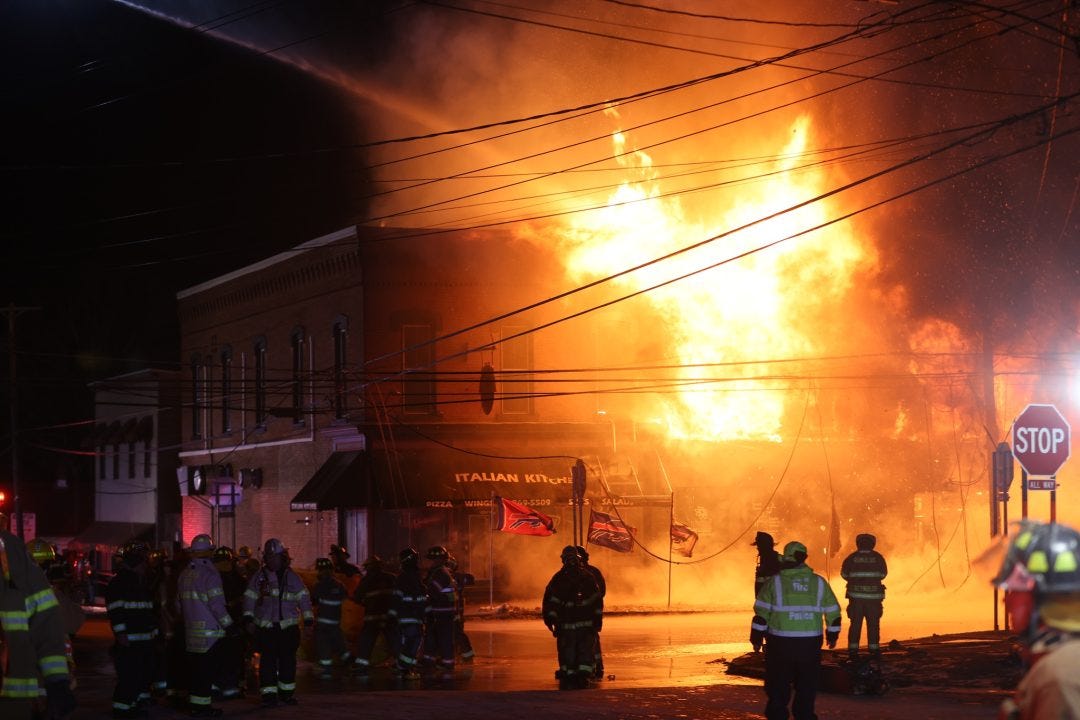
On the surface, the story seems straightforward. Over 200 firefighters from across the region fought tirelessly for nine hours in grueling conditions. Their efforts were nothing short of heroic, and as Ovid Fire Chief Tim Westlake said, these first responders deserve every bit of praise we can give them. Yet, even as the ashes cool, the questions begin: What happens now?
A Food Desert, Expanded
The loss of Big M isn’t just inconvenient; it’s a crisis for an area that was already teetering on the edge of being a food desert. For many rural residents in Seneca County, transportation isn’t just a hurdle; it’s a wall. Without Big M, the nearest grocery store is a 25-minute drive. For those with reliable cars, it’s an inconvenience. For those without, it’s a logistical nightmare. Public transportation is inadequate. Poverty is amplified. And the idea that this is a minor disruption ignores the harsh realities of life in communities like Ovid.
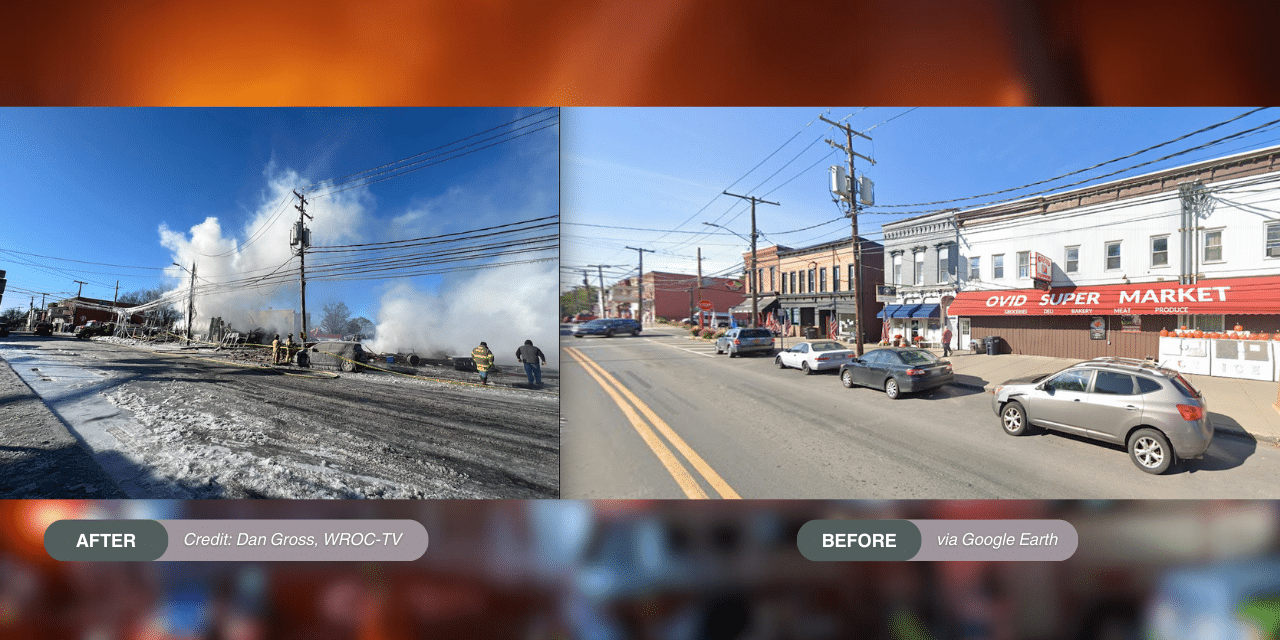
Sure, there’s a nearby Dollar General, which will probably adjust its offerings given that it’s the only show in town. But let’s be clear, losing the Big M in downtown Ovid is about way more than food.
The economic lifeblood of downtown Ovid relied on the traffic that Big M generated. Local businesses—already fragile in a rural economy—depended on the grocery store to draw people downtown. With Big M gone, the ripple effects will hit every storefront, every small business owner, and every employee.
The Weight of Misplaced Judgment
Adding to the tragedy is the reaction from some corners of the internet. The fire’s origin has become a flashpoint, with unfair and cruel scrutiny directed at a mother who chose to save her three young children rather than attempt to battle a potential source of the blaze herself. Chief Westlake pointed out that the actual cause of the fire won’t be known for some time—if at all—despite some outlets reporting the cause ‘determined’.
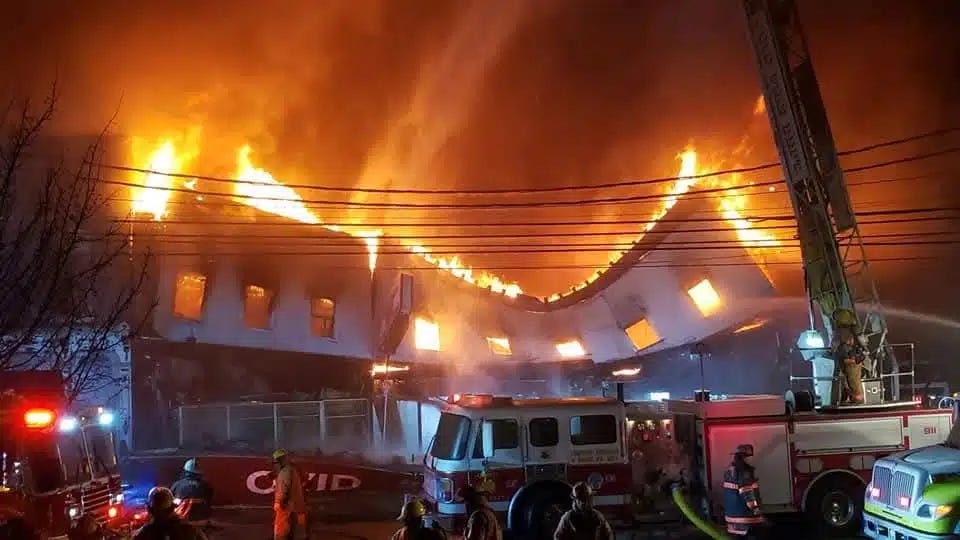
It’s easy to pass judgment from a distance, but the reality is more complex and infinitely more human. She saw smoke, she acted, and in doing so, she made the right choice—prioritizing lives over property.
Social media has a way of distorting our humanity. This woman lost everything, and yet she’s become the target of criticism from people who, from their detached vantage points, believe they would have done better. But ridicule changes nothing. It doesn’t rebuild downtown Ovid. It doesn’t reopen the Big M. And it certainly doesn’t offer solace to someone already dealing with unimaginable loss.
Officials said 15-20 people were displaced by the fire. Around 60 lost jobs. Thankfully though, no lives were lost, and that’s the most-important thing.
What Comes Next?
The road ahead for Ovid is long and uncertain. Rebuilding Big M will take months, if not years. In the meantime, the community will need support—not just from within but from the state and beyond. This moment should serve as a reminder of the vulnerabilities rural communities face. When infrastructure is fragile, when transportation is limited, and when poverty is a persistent undercurrent, the loss of one critical institution can create a domino effect.
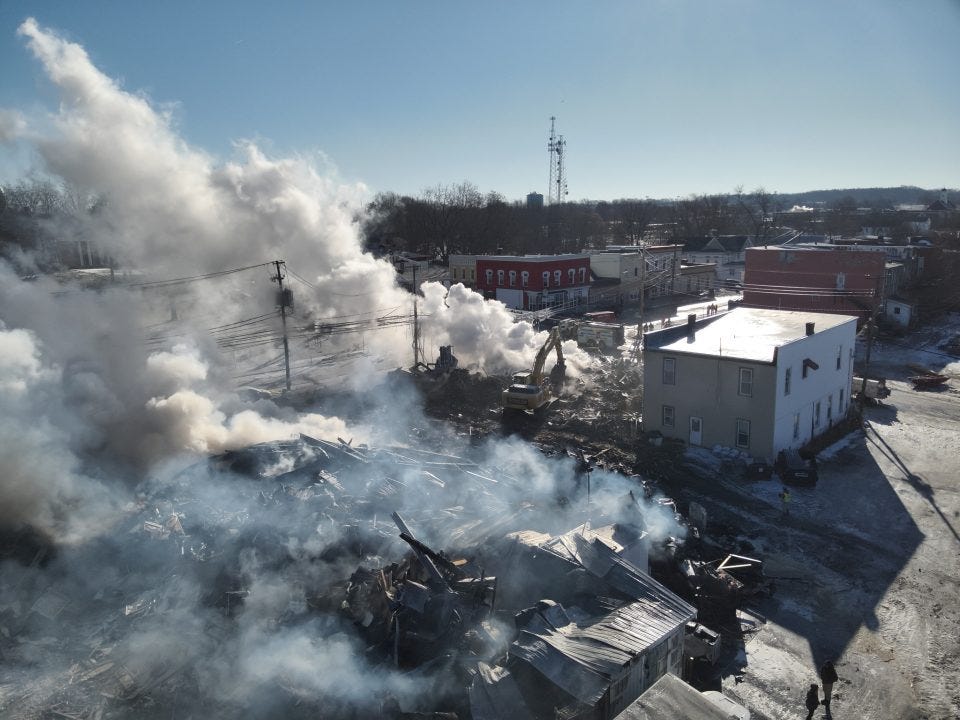
Even Chief Westlake pointed out in a conversation with RochesterFirst.com that small fire departments like his are left making difficult decisions when battling large fires like this one. Whether it’s infrastructure issues—like the shortage of water firefighters were met with in subzero conditions—or equipment that isn’t up to par because the community can’t afford it—it all contributes to the possibility of something tragic, like this, happening again. Just last week, I wrote about the calculation communities are forced to make when it comes to fire protection not knowing the tragedy that was a few days away.
For small towns like Ovid, there’s an urgent need for proactive planning and support. The fire underscores how essential resources—like a grocery store—are tied to the survival of a community. Yet, too often, the focus is on what’s lost rather than what could be done to build resilience. This isn’t just about bricks and mortar; it’s about policies laid out at the state level that ensure communities like Ovid are protected if left to exist.
It’s budget season in Albany, so hopefully the state can earmark some funds to help offset the millions it will take to rebuild Ovid’s downtown.
A Call for Compassion
At its core, this story is a reminder of what makes small communities like Ovid so remarkable: their resilience and humanity. It’s seen in the firefighters who fought tirelessly through the night and into the days that followed, in the neighbors who raised funds and provided physical donations for those impacted, and in the collective grief that binds a community together after loss.
But it’s also a call for a broader sense of empathy. The loss of Big M isn’t just a local story; it’s a microcosm of the challenges rural America faces every day. Let this tragedy inspire us to ask not just how we rebuild, but how we build better—how we create communities that can withstand the fires, both literal and metaphorical, that test them.
In the meantime, let’s set aside the judgment and the snide comments. Ovid doesn’t need more critics; it needs champions.
In Case You Missed It
Last week I wrote about the dollars-and-cents of essential services. Whether it’s healthcare, fire protection, EMS, or something else—boiling everything down to a cost-benefit analysis doesn’t work.
Say Hello
Have something to say? Comments are turned on, and I’d love for you to leave one if you feel so inclined. If you’d rather send an email—whether it’s a thought on a topic discussed in the newsletter or just an idea that you’d like explored a little more—that works too! Tap the button below and it’ll launch an email that I’ll certainly see within 24 hours.