This week two things passed across my desk in a matter of a few days that I thought were worth talking about here.
The biggest was this apparent regionalization study that, to me, seemed to come out of nowhere. It felt urgent. Then, a press release about a capital project in Watkins Glen.
Wayne-Finger Lakes BOCES and 22 participating districts are working with the University of Rochester’s Warner School on a Regional Future of Education Blueprint. The announcement says they’ll examine improvements to existing systems, shared services and new educational structures.
Watkins Glen, which isn’t among those participating districts, is proposing approximately $25.8 million in capital improvements.
The Watkins Glen project didn’t really do anything more than get me thinking about the bigger picture: Are we asking the right questions? Are we being honest with families?
Across the 22 districts participating in the blueprint, enrollment fell 32.5% over 30 years and another 7.5% over the most recent five-year period.
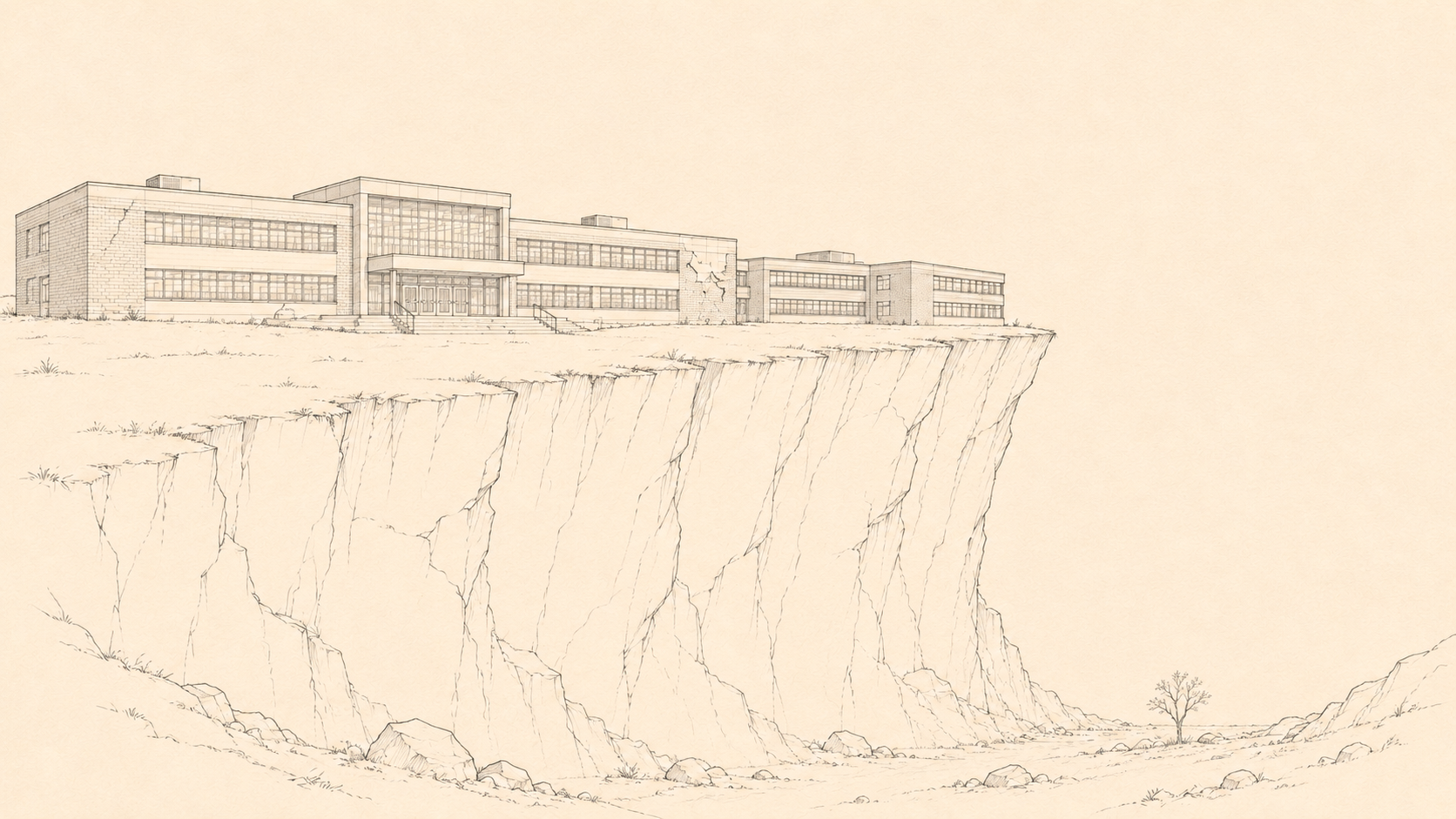
Losing a third of your enrollment means you’re past the “oh, this might be a problem” phase and have landed firmly in “the ship is sinking” territory.
Here we go again.
Every year, as communities across the region get closer and closer to the brink, we see continued investment as if the status quo will just go on forever.
My issue isn’t really with the proposals themselves. It makes sense that a community like Watkins Glen invests in itself.
But investing as if a district is going to exist, the way it does today, without explaining what happens if it doesn’t, is irresponsible.
We’re past the point of pretending. It’s no longer a service to the public to say these investments are smart without acknowledging how they will fit into a more regionalized approach to K-12.
School boards are either unaware of, or unwilling to adequately acknowledge, how many school districts across the Finger Lakes face serious questions about continuing as currently constructed.
Enrollment is cratering.
That sounds dramatic, but when you look at the bigger picture, the last 30 years and then more recently the last five, the regional decline is consistent in a way that should petrify anyone on a school board or serving in administration.
But communities are largely unaware of what that means for their future.
The recent headlines and questions in Palmyra-Macedon are an example. The district decided it needed to go from four instructional buildings to three, effective July 2027. I think that decision makes sense.
Its enrollment declined 12.3% over the five years ending in 2025-26, an annualized decline of about 2.6%.
Families understandably have questions about what comes next. Before the vote, one parent submitted 34 questions about costs, savings, safety and implementation.
Districts would argue they’re being as forthright as they can be about the situation. They’d say the decline in enrollment, increase in need and other things I’m pointing to are reflected in annually released documents, budgets and presentations.
I’d say they need to go well beyond that now, though, and be brutally honest about what the likeliest outcomes are here.
I don’t think it’s the status quo. I think it’s mergers. A lot of them.
Tax increase, tax decrease or holding the line flat, it doesn’t matter. This isn’t about taxes.
Saying it won’t cost taxpayers more money gives a district an easy out. It provides cover, if you will, to suggest everything is fine.
It’s not fine.
This is about operating responsibly, with integrity and transparency.
School districts are asking the wrong questions. Everything in these capital improvement plans is arranged around, “How do we provide the best service here?”
While that has historically been the right question to ask, it’s the wrong framing now. It’s been the wrong framing for a while.
The right framing is more like, “Will we be providing these same services in the same place in another five years? What about 10?”
I think families should prepare for the likelihood that their district, like many across Upstate New York, will not look, feel or operate the way it does today in five, 10 or 15 years.
The evolution may be slow, or it may come all at once. Families should be prepared for that reality.
And the enrollment numbers don’t tell the whole story.
My earlier analysis found that, among districts with comparable data, economically disadvantaged students represented 40.8% of enrollment in 2011-12 and 46.2% in 2025-26. Their actual number declined modestly. The rest of enrollment declined much faster.
Communities are getting smaller while their schools serve a greater concentration of economic need.
This conversation spills into housing because it might be one of the last levers the region has available to reverse the trend. In some places, it also might already be too late to preserve the system as it exists today.
The blueprint is progress. But it raises exactly the concern I’ve warned people about every time this topic comes up: Decisions about the future could take shape before communities really get input.
There’s no process for community participation described in the announcement. That doesn’t establish that families will be excluded. But it leaves the question unanswered.
I’m sure the Warner School and whoever else is involved will come up with very sensible ideas. I don’t think this will necessarily postpone decision-making, either.
I’m afraid this could become the blueprint for how the state regionalizes education without getting its own hands dirty.
Because if these plans aren’t the desired outcome for families, who wears that criticism? Who answers the questions? The Warner School? School boards and administration? Someone else?
The announcement doesn’t select mergers. But I think mergers are where a lot of this leads.
To be clear, I think mergers make sense. I think they can give students better opportunities and provide a more efficient way to deliver services.
But the conversation should happen in an open environment. Communities should get a real voice during the process.
To the people who feel like their district could get merged into a neighbor’s, or their community suddenly split between multiple surrounding districts, I’m sorry. I feel bad.
But this is what happens when communities are left to die on the vine, as so many have been since the 2000s.
Residents echo the notion that no one wants to live there. Businesses respond to shrinking demand by closing up shop. Existing property owners shout down new housing.
Communities had choices about growth over the last two decades. Instead, too often, they elected representatives who echoed doom and pointed to the state as the reason no one wanted to live in their picturesque community.
To be crystal clear, I’m not laying community decline over the last 30 years at the feet of school leaders. It’s absolutely not on them.
The community at large has to own the conditions that brought us to this moment.
The town, planning and zoning boards that said no too often. The people who showed up to board meetings and said they didn’t want the new housing, or questioned the placement of a new business because it didn’t match their precisely personalized view of what the community should be.
The people who declined to get involved in the things that actually shaped the communities around us over the last three decades. Had they been there to say yes, the outcome could be different.
There isn’t a single boogeyman everyone will be able to point to and say, “It’s their fault!”
There’s responsibility to go around because, by and large, growth was never given enough opportunity to succeed.
School leaders can’t undo all of that. But they can say the quiet part out loud.
If these conditions don’t change, we’re on track to need a merger. Here are the districts we should be talking to. Here’s what that could mean for your children.
Then explain how the investments we’re making today fit into that future.
Are we asking the right questions? Are we being honest with families?
That’s what I want school leaders to answer.
Enjoy the column? Leave a comment or subscribe below!