A quick note off the top
Yes, this is different than my usual columns. A little reflective, but mostly a frame-up for some changes coming to a podcast I co-created a decade ago with Jackie Augustine called The Debrief. If you’re looking for the regular columns — they’ll be back Sunday. Our final episode of the show, which was in limited production this year — is available at the bottom of this page. As always, thanks for reading and following along.
Change can be a good thing!
People ask me some version of the same question all the time: “Josh, why did you stop reporting a few years ago?”
The honest answer isn’t particularly interesting unless you’re really into the media and political landscape of the last decade (which if you’re reading this — maybe you are, ha).
I stopped because my job changed. But also because people stopped agreeing on basic facts. And when there’s no shared agreement on facts, real journalism becomes pretty much impossible.
For years, I watched local issues get filtered through ideology first and evidence second. Data, public records, firsthand reporting — all of it mattered less than whatever narrative someone already believed. I wrote a little about an interaction I had last week that reminded me of that theme.
Anyway, as time went on the job shifted from informing the public to refereeing competing narratives.
That’s not journalism. If I’m being honest, it felt a lot more like crowd control than anything else. Especially with so much of this playing out on platforms like Facebook, X, or now Threads.
At the same time, the journalism-first business model collapsed. Legacy papers, radio, and the platforms that absorbed them all leaned harder into clicks and conflict. Attention became the product, and truth turned into a liability. Depth was punished. Nuance was buried. And the loudest interpretation won the day — over-and-over.
Those forces — fractured reality and a broken incentive structure — created a conundrum I couldn’t ignore. A public square with a lot of noise and almost no shared foundation underneath the conversation.
That’s why I stepped away from reporting. It’s also why Jackie Augustine and I are reshaping The Debrief as we head into 2026.
Let’s be clear about something upfront: This isn’t me lamenting journalism. Facts still exist. Records still exist. Reality still exists. What’s broken is the information ecosystem we’re asking journalism to survive inside.
Spend ten minutes in any local Facebook group and you’ll see it play out in real time. A zoning board vote becomes corruption. A housing proposal turns into a conspiracy. A school board decision becomes a political loyalty test. Routine public business now spirals into team-based combat, where volume substitutes for credibility.
I’ve watched this happen from both sides of the table. I’ve covered meetings where misinformation drove the entire discussion before the gavel even dropped. I’ve seen residents dismiss environmental studies, traffic counts, and tax data because the facts conflicted with the story they preferred.
Local journalism can push back against some of that. But when the model rewards speed and controversy over understanding — coverage thins out when people need it to do the opposite. And when audiences are primed to treat facts as partisan, even the best reporting gets steamrolled by political narrative.
So, what’s going to be new-and-improved about The Debrief?
Jackie and I don’t share the exact same politics. That’s not a bug. It’s the point. What we do share is a belief that a functioning civic space requires more than the nonsense of punditry and social media outrage. It requires a willingness to sit with complexity.
The show is entering it’s 10th year of production. And if you’ve been with us for a while, you’ve seen the different formats, faces, and seasons. But in 2026, we’re making a deliberate shift — not away from discussion, but deeper into purpose.
The existing conversation-driven format stays. But we’re adding two new ones, designed for how people actually consume information now — and for what communities are missing.
First is “The Two Minute Drill,” led by Jackie. This is civic literacy in consumable chunks. For years we’ve heard the same questions: How does this work? Who actually made that decision? What’s the difference between a county administrator and a county manager? What about a board of supervisors versus a county legislature?
Local government is complicated, and it varies wildly from place to place. People aren’t uninformed because they don’t care. They’re uninformed because no one ever explained the system. The Two Minute Drill will.
Short, factual, and built for social and YouTube, without dumbing anything down.
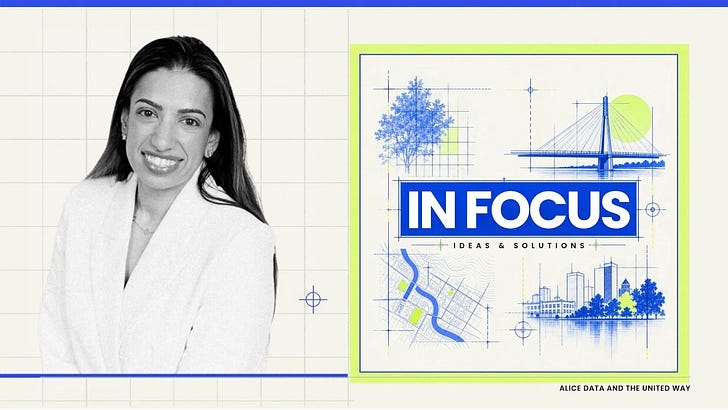
The second new format is “In Focus” — a long-form interview series centered on issues and solutions. Yes, it shares the name of my Substack and my old column, and that’s intentional. This is a partial callback to Inside the FLX, but with a clear line drawn between journalism and what we do now.
This is commentary, insight, and conversation. Interesting people. Interesting ideas. And a serious focus on real, tangible solutions — not performative outrage or talking points.
Since moving out of reporting and into the community, I’ve spent more time with the people who actually implement policy — planners, administrators, nonprofit leaders, and system builders. I’ve served on zoning and planning boards, historic preservation commission, and even wrote a few competitive, community-based grants to deliver results in the community I’ve called home since 2019. That experience and perspective has changed me. You stop thinking about abstractions and start seeing where things actually break.
That’s the lens we’re bringing to The Debrief in 2026.
Because here’s the reality: Small communities across Upstate New York are struggling. People are hungry for change, even when they can’t quite articulate what that change should look like. These towns and cities here are the backbone of the region — and yet many don’t realize how achievable real progress is when the conversation is grounded in reality instead of the noise we’re consumed by online.
We’re working on carving out a new civic space — one where facts matter, disagreement is productive, and people leave more informed than when they arrived.
That’s the goal. That’s the work. And that’s why we’re doing this now.
Check out our final episode of 2025!
I post new columns every Sunday, and while this week is a break from the typical — we’ll be back to our usually scheduled reading material next week. Stay tuned and share with a friend! If you haven’t subscribed — consider doing so! It’s free and you won’t get spammed!