
If you spend enough time inside planning and zoning meetings across the Finger Lakes, you start to notice the rhythm. A housing proposal is introduced. Residents raise concerns about density, traffic, or identity. Board members ask for revisions. Staff flags technical issues. The applicant agrees to come back next month. Everyone acknowledges that housing is tight and affordability is worsening. But, the meeting ends, and very little has actually changed — even though on paper it seems like a lot has happened.
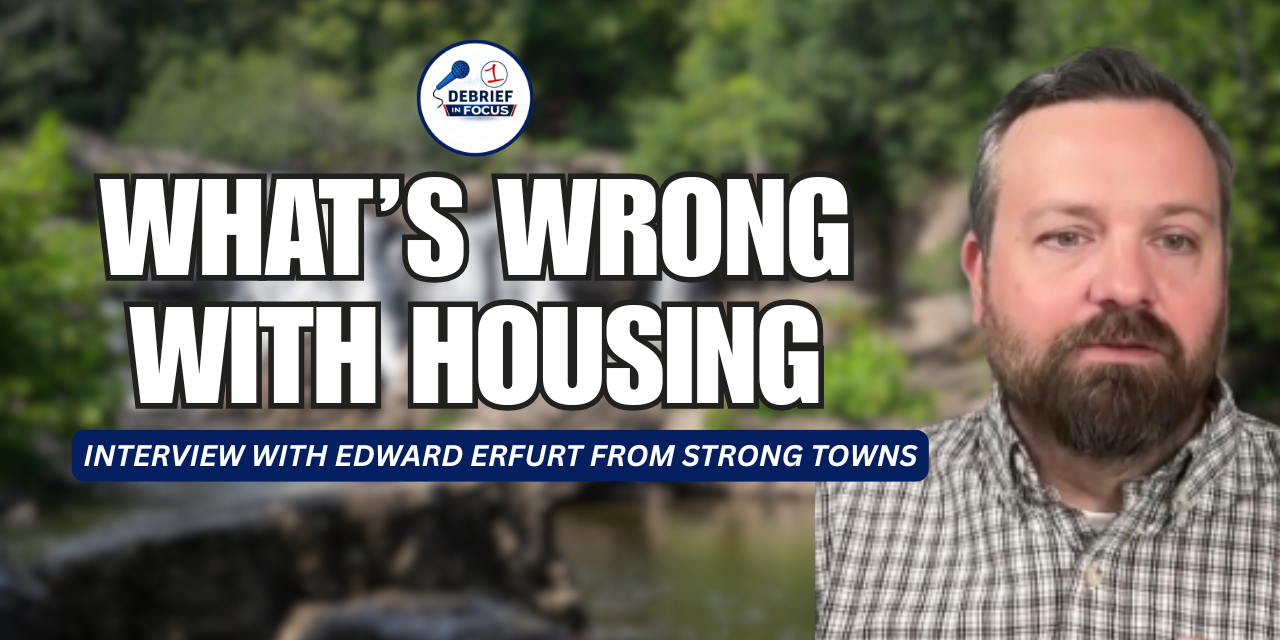
After speaking with Edward Erfurt, Chief Technical Advisor at Strong Towns, I came away convinced that Upstate New York doesn’t just have a housing problem.
It has an action problem.
It’s easy for local officials to point to forces outside their control. Interest rates are set in Washington. Construction costs are driven by global markets. State policy shapes much of the regulatory framework. Those realities matter. But as Erfurt said during our conversation, “There are many things at a local level communities can do.”
Too often, municipalities focus on the factors they can’t influence while ignoring the friction embedded in their own systems.
Across the region, the most common barriers to housing are procedural. Permit reviews that stretch for months. Departments that review the same project sequentially rather than simultaneously. Applications that demand exhaustive detail before staff will even engage. Minor projects that require variances as a matter of routine.
None of these obstacles were created overnight. They accumulated over decades, as communities layered new rules on top of old ones to solve individual problems.
The result is a process heavy enough that only large, well-capitalized projects consistently survive it. Smaller, incremental projects — the kind that actually fill gaps in the housing market — often don’t.
That distinction matters because the housing shortage Upstate is experiencing is not just about total unit count. It’s about the type of housing being produced. Large homes on the edge of town continue to move forward because the financial system and regulatory framework are designed to accommodate them. Meanwhile, the homes many residents actually need — starter houses, small infill apartments, converted upper floors, even accessory dwelling units — face far more resistance.
Erfurt put numbers to what many planners privately acknowledge. “In every community… there’s at least 30 to 40 percent of the market that wants smaller infill housing,” he said. “We’re building less than one percent of that.”
That imbalance helps explain why young workers struggle to find entry-level housing, why older residents can’t easily downsize within their neighborhoods, and why employers across the region report hiring challenges tied directly to housing availability. This isn’t simply a supply issue. It’s a permission issue.
One revealing indicator of that permission problem is how frequently variances are granted. If nearly every project requires an exception, the zoning code is no longer guiding development; it is obstructing ordinary activity. “If the standard is everything is a variance,” Erfurt said, “something is wrong with that.”
In many Upstate communities, boards routinely approve exceptions for projects that look nearly identical to existing buildings in the same neighborhoods. The written rules stay in place, but the practical standard becomes whatever can survive a lengthy approval process.
The communities that are beginning to see progress are not always those undertaking sweeping code rewrites. In many cases, the shift is cultural rather than legislative. As Erfurt described it, they move “from gatekeeping to guidance.”
That means helping applicants navigate approvals instead of guarding the process. It means aligning departments so zoning and building reviews occur concurrently. It means trimming application requirements to focus on what actually protects health, safety, and neighborhood fit. These changes may sound administrative, but they can dramatically shorten timelines and lower barriers for incremental development.
There is also a financial dimension that rarely dominates public hearings but increasingly shapes local stability. Large subdivisions can generate short-term growth, yet they also create long-term infrastructure obligations: Roads to maintain, pipes to replace, services to extend. Some municipalities are beginning to incorporate fiscal impact into development review, asking not only whether a project complies with zoning but whether it will generate sufficient long-term revenue to support itself. That conversation tends to favor productive infill over expensive outward expansion, but it requires local officials willing to ask tougher questions.
For years, Upstate communities could afford slow decision-making. Population growth was modest. Housing pressure was manageable. Today, that margin for delay is gone. Migration patterns, demographic shifts, remote work, and rising construction costs are colliding at once. Each postponed reform compounds the shortage. Each year of inaction narrows the range of affordable options for residents.
No one in the region needs another housing study explaining the problem. Most municipalities already have one. What they lack is implementation. Communities across the Finger Lakes and Upstate New York desperately need action — and they need it now.
That action doesn’t require waiting for federal interest rates to change or for Albany to rewrite every statute. It requires local leaders to examine their own processes, remove unnecessary friction, and allow the kinds of small, incremental projects that historically built the community around them decades ago.
The housing crisis here is not hypothetical or approaching. It’s already shaping who can afford to live in our communities and who cannot. The question is no longer whether change is necessary. It’s whether local governments are prepared to move from discussing the problem to making decisions that address it.
Thanks for reading In Focus! Subscribe for free to receive new columns and interviews every week.