Something I’ve come to love about running long races—marathons, ultras, and the relentless training that comes with them—is that you can’t just run with the finish line in mind. You need a goal, of course, but a goal without a plan is just a wish. What actually gets you across the finish line isn’t the idea of finishing—it’s the benchmarks that make up the plan. The training cycles. The mile splits. The small but essential markers that ensure you’re on pace to hit your target.
Lately, I’ve been thinking about how this mindset is missing from how we tackle our biggest challenges.
Recently on a run, I was listening to a podcast about Abundance, the new book by Ezra Klein and Derek Thompson. The discussion—and the early reactions to the book—have been eye-opening. Klein and Thompson argue that for the last 40 or 50 years, progressive policy has been more focused on preventing harm than promoting growth. The result? We’ve created a system that prioritizes restriction over expansion, caution over ambition, and scarcity over abundance.
And that failure is showing up everywhere.
The problems we’re facing aren’t getting smaller; they’re getting bigger. And they’re growing fastest in the places that claim to be the most progressive, where ever-larger sums of money are being thrown at these issues—without meaningful results.
We can’t just throw money at the problem.
Take housing. It’s arguably the defining issue of our time, and it’s inexplicably linked to nearly every other systemic challenge—economic mobility, education, birth rates, even climate policy. If you can’t build housing, people can’t move where the jobs are. If people can’t move, local economies stagnate. If local economies stagnate, families don’t put down roots, birth rates decline, and schools begin to shrink and consolidate.
This isn’t some abstract theory. We’re watching it happen in real time. And yet, instead of focusing on how to build more, faster, and at every income level, we get policies that add layers of bureaucracy, making it even harder to build. The result? The exact scarcity that fuels the crisis in the first place.
That’s what Klein and Thompson are getting at: If we want to fix big problems, we have to stop thinking in terms of spending and start thinking in terms of building. We need policies that actively produce results, not just ones that show we care about an issue.
Results matter. They really do.
And this is where the marathon mindset comes in. If a town claims it’s committed to tackling the housing crisis, what does that mean in real, measurable terms? Are they streamlining zoning laws? Are they approving new developments? Are they tracking how many new homes are actually getting built?
Results aren’t just about solving problems—they’re about keeping people engaged. A community might feel like it’s doing fine because its population is stable and its school district hasn’t yet had to consolidate. But these problems don’t arrive all at once. They creep in slowly. One day, the town realizes it’s aging rapidly. The next, school enrollment dips just low enough to justify merging with a neighboring district. Then, suddenly, people wonder how things got so bad.
They got that bad because we ignored the benchmarks along the way.
We need growth—not excuses.
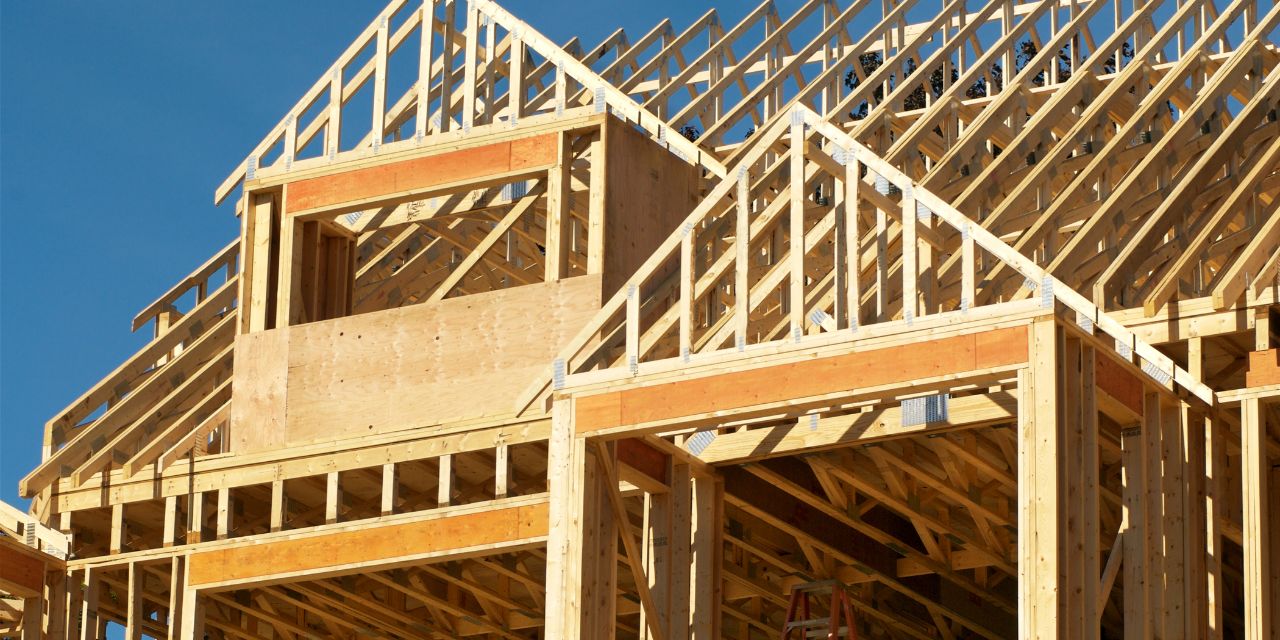
The simplest takeaway from all of this? We need growth. We need more housing at every level—workforce and senior options, single-family homes and multi-family buildings, accessory dwelling units, and innovative housing types we haven’t even thought of yet.
But instead of clearing a path for that growth, most policy makes it harder. We get restrictions on density, endless environmental reviews, and zoning laws that preserve the past at the expense of the future.
We have to shift our mindset. Instead of asking, “How do we prevent any possible downside?” we need to be asking, “How do we make progress—and make it fast?” Because without progress, we’re just running in place.
And if we want to reach the finish line—that’s exactly what we cannot afford to do.
In case you missed it.
Last month I wrote about one of the many modular-style home builders that popped up. There are countless local examples, but this one is actually based in Florida—where the natural environment for building homes is particularly challenging. This builder is putting together homes that can withstand some of the strongest sustained winds on the planet and can be built by a small team in a matter of hours.