A couple weeks ago a friend in the community planning space who lives in Texas sent me an article — and a text message. “I wonder how many people who want more green energy in New York realize they and their neighbors are the problem?”
It was a rhetorical question.
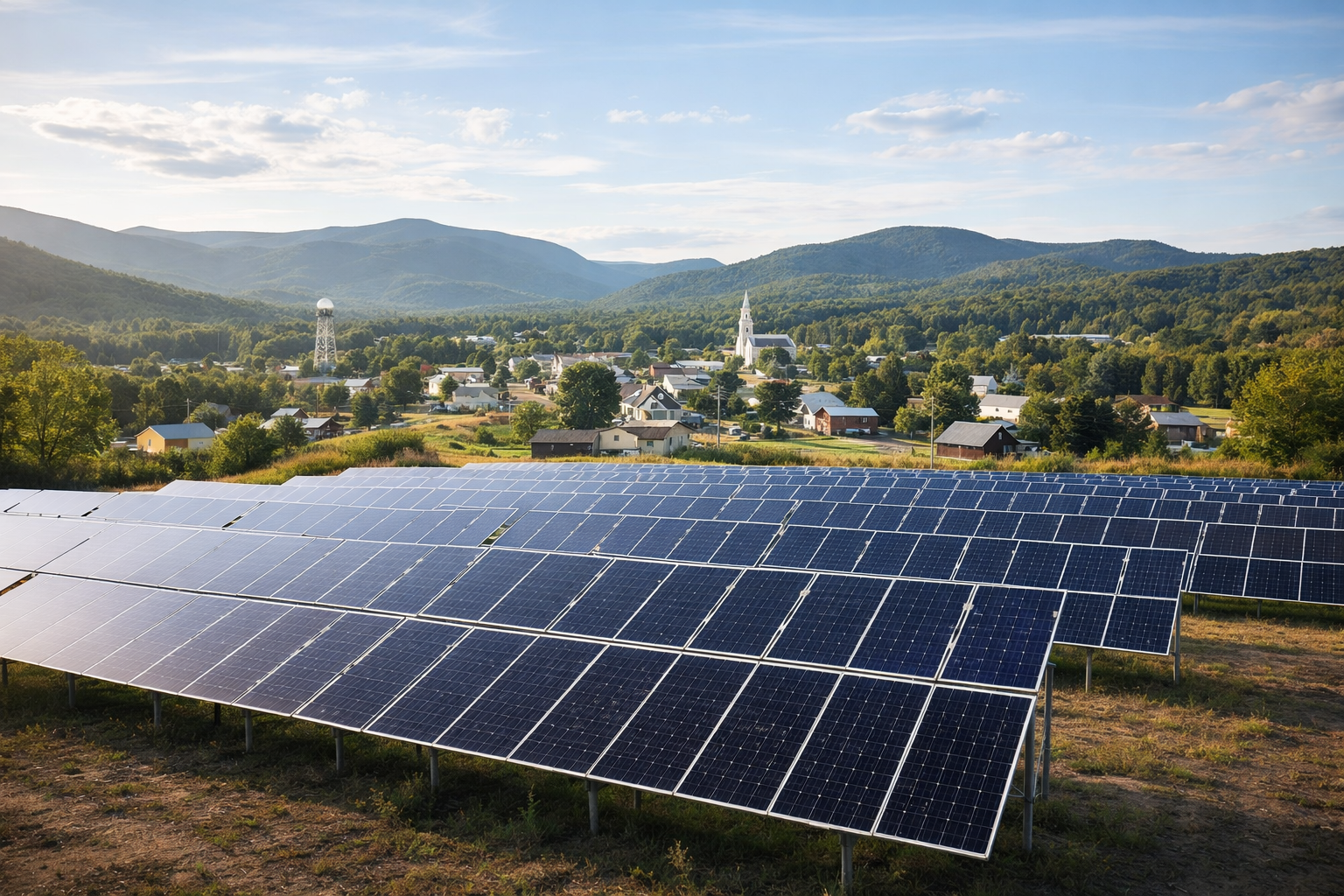
At this point, even people outside New York have heard the stories. Local communities pushing back against solar arrays. Wind projects tied up in reviews for years. Facilities meeting moratoriums before the first shovel ever hits the ground.
Meanwhile, the state says it wants more solar and wind production. The 2019 Climate Act set aggressive goals — including generating 70 percent of the state’s electricity from renewable sources by 2030 and moving to a fully clean grid by 2040.
The gap between ambition and reality got so wide it forced Governor Kathy Hochul to change course in what will certainly frustrate many supporters. But first, let’s get back to The Lone Star State.
Over the past two years, Texas added more wind and solar power than New York has built in the last two decades. Fourteen states have added more renewable generation since New York passed its landmark climate law. Today the state ranks 34th nationally in building large utility-scale solar projects.
And yet the irony with the backdrop of that report is that this isn’t really ideological at all. Deep red Texas is lapping progressive New York in renewable production — not because it’s sunnier or because investors like them more, but because they made it easier to build.
Two decades ago Texas invested heavily in transmission infrastructure, building high-voltage power lines to move electricity from the windy plains in the west to cities like Dallas and Austin. Those lines were completed in 2014 and effectively removed the biggest bottleneck to renewable development.
New York is only now starting something similar. The state authorized a $4.4 billion transmission expansion in 2023, and it won’t be finished until at least 2030.
The regulatory frameworks look very different, too.
In Texas, developers can build wind and solar even if the grid can’t carry every watt of power all the time, occasionally curtailing production rather than front-loading millions in upgrades. In New York, developers typically must pay for those upgrades up front.
Permitting is another major divide.
In Texas, local governments have very limited authority to block renewable energy projects. Developers still have to follow federal environmental rules, but counties generally can’t impose moratoriums or kill projects outright.
In New York, local opposition can stall a project for years. Some proposals languishing so long they just die.
New York was also the most expensive place in the country to build large-scale solar projects in 2024. Oftentimes, subsidies are required to make them viable. Meanwhile, electricity prices in Texas are roughly half what New Yorkers pay.
There’s one clear takeaway from all of this: Policy only goes so far, and action matters a lot more.
One comparison from the report says it all. A single county in west Texas, Nolan County, now has roughly the same wind power capacity as the entire state of New York.
Renewable energy isn’t political there like it is in New York. It’s just something they do.
In an op-ed published Friday, Gov. Kathy Hochul argued that climate policy has to be balanced with affordability, federal headwinds, and rising project costs. They were the reasons she cited to adjust New York’s climate law timelines and expectations.
She’s not wrong about the pressure. She’s also right that “something has to give.” But it’s self-inflicted, and affordability isn’t the core issue here.
It’s clearly lack of action and execution.
New York didn’t get into this position because it aimed too high. It got here because it set aggressive goals and built a system that made achieving them extraordinarily difficult.
It was policy that amounted to wishful thinking.
That’s not a new concept. We’ve seen it play out repeatedly in local planning conversations across Upstate. Communities adopt comprehensive plans, talk about outcomes, and then fail to follow through when real decisions have to be made.
The same pattern is playing out at the state level with energy policy.
But this conversation also can’t happen without acknowledging a complete lack of meaningful accountability for the systems actually delivering power to New Yorkers. Utilities have spent decades operating in a structure that prioritizes returns and cost recovery over long-term system health or effectiveness.
The grid wasn’t built for speed, flexibility, or even affordability. It was built to generate profit.
Now the state is trying to retrofit that system to meet 21st-century climate goals and demand, while simultaneously being stunned it’s slow, expensive, and resistant to any change. If the state were serious about it’s goals — that’s where it should’ve started.
To her credit, Hochul is acknowledging the tension. But if the response is limited to adjusting timelines, redefining targets, or shifting accounting methods, then nothing fundamental changes.
The same barriers remain. The same projects stall. The same local fights repeat themselves.
If the state is serious about closing the gap between ambition and reality, it has to confront the structural issues directly — permitting bottlenecks, local veto power, grid constraints, and the fact that utilities aren’t treated like the privately-held companies they are.
After a couple decades of watching — and then covering — local government, here’s a universal truth: Deregulation sounds great on paper until it’s the thing you don’t want built next door.
That’s the central question raised by all of this.
Can anything substantive actually be achieved through a political and regulatory process that rewards saying no?
There will always be tradeoffs with good policy. Every major infrastructure decision involves concessions somewhere, and not everyone will be happy with the outcome.
That’s the cost of progress.
But good policy can’t survive inside a loop where the goalposts keep moving, accountability is wishy-washy, and nothing ever actually gets built.
And if that doesn’t change, it won’t matter how many adjustments are made in Albany. The problem was never just the targets. It’s whether anyone is willing to actually deliver on them.
This past week, Jackie Augustine and I got together (virtually) to talk about a bunch of our recent columns and the state’s pending environmental fight. You can check out the entire episode below, or find us on Spotify/Apple Podcasts.
Thanks for reading In Focus! Subscribe for more columns and interviews every week.