
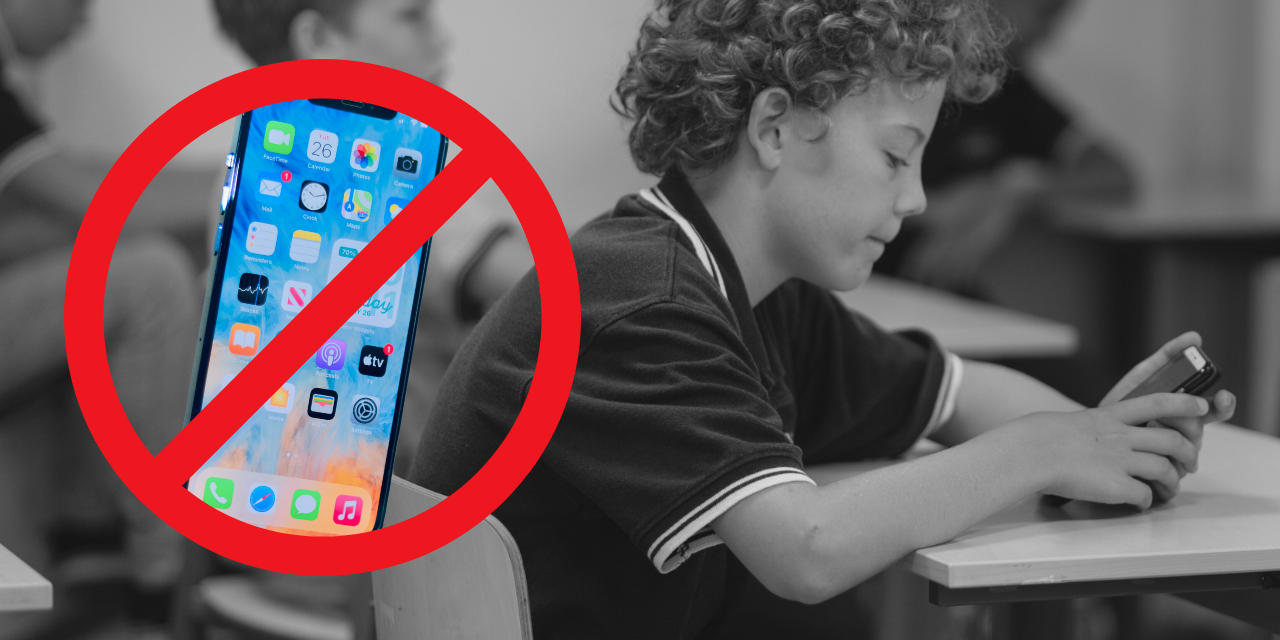
This week I wanted to start out with something new—a poll—before we get rolling with another edition of the newsletter. There are around 7,000 of you reading these newsletters and honestly, I love the feedback (emails, messages, etc.) almost as much as I do writing them. That’s why I’m dropping polls at the start of each edition—involving the topic-at-hand. It’s simple, anonymous, and Substack promises, easy to use.
School districts across New York are toying with cell phone bans. There’s a range of them. Some are complete, where students aren’t allowed to access them from first-to-last bell. There are partial bans, where districts try to eliminate use in classrooms, while permitting it in other non-educational settings. Then, of course, there are the districts living with the status quo—leaving it, I suppose, to teachers.
What do you think?
The data doesn’t lie—we have a smartphone problem.
The criticism that smartphones are a problem in schools is real. Pew Research found over the summer that 72% of high school teachers see them as detrimental to student outcomes. There’s data to back this up, too. The study, Smartphone Bans, Student Outcomes, and Mental Health by Sara Abrahamsson, got into the weeds on this topic—among others—finding that banning smartphones significantly improves mental health, reduces bullying, and enhances educational outcomes, particularly for girls and students from lower socioeconomic backgrounds.
The research showed a marked decline in mental health consultations among girls exposed to bans, alongside improved GPAs, test scores, and an increased likelihood of pursuing academic high school tracks. Bullying incidents decreased across all genders, but the effect was stronger in schools with stricter policies. The study effectively highlights the utility of smartphone bans as a low-cost intervention to address educational shortcomings and enhancing mental health.
A Closer Look At That Data
The study found that while there was significant impact for girls—the impact for boys was less. Here’s a look at what stands out in the study.
60% Reduction in Mental Health Consultations: Girls exposed to smartphone bans experienced a dramatic 60% reduction in specialist consultations for psychological issues during middle school, indicating significant mental health benefits.
46% Decrease in Bullying Among Girls: Bullying incidents among girls dropped by 46% three years after implementing smartphone bans, highlighting the policy's potential to create safer school environments.
Academic Gains for Girls: Girls’ GPAs improved by 0.08 standard deviations, and their mathematics test scores increased by 0.22 standard deviations post-ban, showcasing the academic benefits of reduced distractions.
Socioeconomic Impact: Girls from low socioeconomic backgrounds saw the largest gains, including a 6% increase in the likelihood of attending academic high school tracks, helping to close educational gaps.
Gendered Smartphone Usage: The study revealed that 70% of girls spend over two hours daily on their phones compared to 54% of boys, explaining why the bans had a more profound impact on girls' outcomes.
Bans are a first step—not the last one.
My issue with smartphone bans at schools isn’t with the action itself. It’s more related to the reality that exists outside the classroom. It’s easy to support measures—generally—that improve mental health, lessen the impact of bullying among kids, and improves academic outcomes. Even if those benefits are minimal—it’s still good. Like a lot of proposed solutions, though, it falls well-short of fixing the problems ultimately created by social media.
Even with all the benefits of smartphone bans in schools, the reality is that these measures are temporary fixes for a much larger, more insidious problem: the broader cultural and psychological grip of social media on young people. Once students leave the controlled environment of the classroom, they re-enter a world where the algorithms that fuel social platforms are designed to extract as much of their attention as possible.
This isn't just about smartphones; it's about the addictive nature of the apps on them. It’s about a multi-billion-dollar industry that profits from sowing insecurity, anxiety, and division among its youngest users. The smartphone ban is like putting a lid on a boiling pot while ignoring the fire beneath it. Sure, it prevents some immediate damage, but it doesn't extinguish the flames.
So, what’s the real solution? How do we ensure that these gains—fewer mental health crises, less bullying, better academic performance—aren’t limited to the hours kids spend in school? The answer lies in broader societal interventions that take on the systemic roots of the issue.
(1) Digital Literacy Education as Core Curriculum
We must treat digital literacy with the same importance as reading, math, or science. Teaching students not only how to use technology but how to critically evaluate it is essential. They need to understand how social media platforms are engineered to exploit their attention and manipulate their emotions. Empowering students with this knowledge can help them develop healthier relationships with their devices.
(2) Parental Accountability and Support
While schools can implement bans, the home environment often reinforces unhealthy patterns. Parents need tools and education to set boundaries and model good digital habits. Too often, parents are unaware of the content their children are consuming or the cumulative hours they spend online. Worse yet, adults are often the worst-offenders when it comes to poor behavior on social media.
(3) Regulation of Social Media Platforms
The issue isn't just how often young people use their devices, but what they encounter when they do. Federal and state policymakers need to hold social media companies accountable for their design practices. This could include age-appropriate content regulations, limits on targeted advertising to minors, and greater transparency about algorithms.
(4) Community-Driven Solutions
Communities can create tech-free zones or encourage activities that don’t involve screens—like after-school programs focused on sports, arts, or mentorship. These alternatives provide kids with opportunities to engage meaningfully with peers and develop skills that don’t rely on technology.
(5) Revisiting the Role of Schools
Schools can’t single-handedly solve the smartphone crisis, but they can be a safe haven from it. Incorporating mindfulness, social-emotional learning, and tech-free periods into the school day can reinforce the positive effects of smartphone bans. Schools also need to rethink how they use technology in the classroom, ensuring it serves as a tool for learning rather than a distraction.
At some point—we need to start playing the long game.
If we don’t address the underlying cultural dynamics, smartphone bans will remain a band-aid on a deeper wound. What’s at stake here isn’t just a few points on a GPA or fewer visits to a counselor—it’s the broader question of how we equip the next generation to navigate a world increasingly dictated by technology. In my last newsletter I talked about how we often ask policy to do more than it’s able—resulting in a lot of frustration. Banning smartphones in the classroom won’t make society better or heal it from all the ailments created by these platforms over the last 30 years.
Real progress will require systemic change, cultural shifts, and a commitment to prioritizing the well-being of people over the profits of Silicon Valley. Only then can we say we’ve truly solved the problem.
Say Hello
Have something to say? Comments are turned on, and I’d love for you to leave one if you feel so inclined. If you’d rather send an email—whether it’s a thought on a topic discussed in the newsletter or just an idea that you’d like explored a little more—that works too! Tap the button below and it’ll launch an email that I’ll certainly see within 24 hours.