
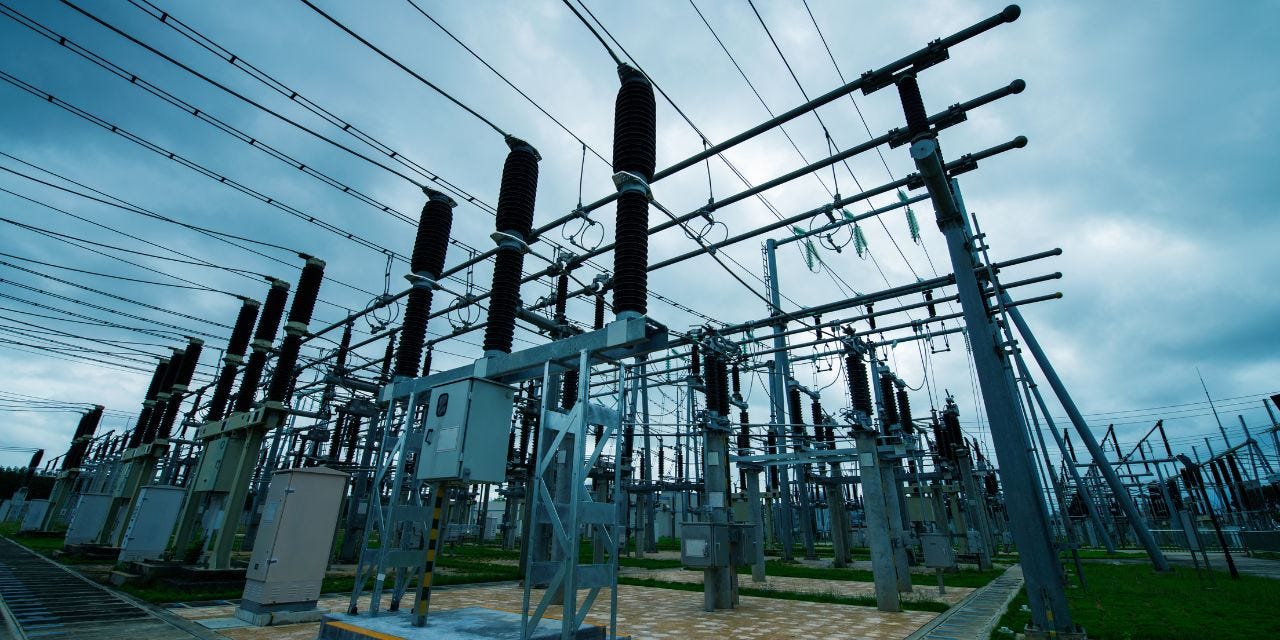
When utilities talk about “investing billions” in New York’s electric grid, it sounds like they’re risking their own capital on long-term bets. Big projects. Big risk. Big payoff.
That’s not how this system works, though.
Which is why the public response to grid-upgrade headlines isn’t, “Great, fix the grid,” but, “Why am I paying for all of this while shareholders still get guaranteed returns?”
That question isn’t cynical. It’s rational, and shows up in recent reporting.
The Times Union’s Ezra Bitterman laid out the scope of the effort and its price tag last week. In 2023, the Public Service Commission approved $4.3 billion for 62 transmission projects statewide, with costs spread across all ratepayers. By 2030, average households are projected to pay roughly $32 to $64 per year for those transmission upgrades alone. National Grid’s “Upstate Upgrade” includes rebuilding or constructing roughly 1,000 miles of transmission lines and 45 substations.
And it doesn’t matter which utility we’re talking about — they all operate with the same set of rules. Unfortunately, not many people know what they are.
Those projected costs are real for users like You and I. And so are the grid’s limitations. Much of New York’s electric system is old, constrained, and poorly aligned with where new demand is emerging.
But what matters just as much as what is being built is who is actually paying — and how the system is designed to work.
In regulated utility world, words like “investment” and “spending” mean something very different than they do in everyday life.
Utilities do not typically invest their own money the way a private company would when opening a factory or launching a new product. Instead, they operate under a cost-of-service model built around something called the rate base. When a utility builds infrastructure and regulators approve it, that asset is added to the rate base. Customers then repay the cost of that asset over time through their bills — including financing costs — while shareholders earn an approved return on equity.
In plain terms, utilities front the capital through borrowing and equity, but the plan from day one is full recovery from ratepayers, plus profit. Shareholders are not absorbing meaningful downside risk. They are investing into a system designed to repay them, as long as regulators deem the spending reasonable.
That structure is why capital-heavy projects are attractive to utilities. Larger capital programs expand the rate base, and the rate base is where guaranteed returns are earned. This is not a secret or a scandal. It is the business model regulators created to ensure utilities could reliably raise capital.
But it also explains why customers should bristle when they hear utilities talk about “investing billions,” as if those dollars were being donated out of goodwill.
Utilities point, correctly, to infrastructure that is decades old — in some rural areas approaching a century. Bitterman quotes National Grid executives describing transmission lines built for small communities now being asked to export massive amounts of renewable power across the state.
That’s true. It’s also not new information.
The grid did not wake up in 2024 and become old. It has been aging for a long time. Replacement and modernization was deferred when political appetite for rate increases — like it always is — was low. That approach might have kept short-term bills down over the last two decades. But it also created a backlog.
NYISO’s own planning documents underscore just how fragile the system already is. In its 2025–2034 Comprehensive Reliability Plan they found that roughly 25 percent of New York’s total generating capacity is more than 50 years old, with some units pushing 70 years. As those plants age, outages are becoming more frequent and more severe. NYISO projects that nearly 3,000 megawatts of existing fossil-fuel generation could be unavailable by 2034 due to retirement or end-of-life failures — capacity the system currently depends on to stay stable.
New York is not facing a hypothetical future problem. It is already operating on thinning margins created by decades of deferred replacement.
What is different now though is timing. Electrification, renewable mandates, AI data centers, cryptocurrency mining, and large-scale manufacturing are all landing at once. The grid that was “good enough” for decades is suddenly insufficient — and the bill is arriving during an affordability crisis.
The Times Union story makes clear that utilities see transmission as the central bottleneck for everything from renewables to economic development. Transmission lines are described as highways, with substations acting as off-ramps to homes and businesses. Without upgrades, large swaths of the state are effectively closed to new projects.
From a policy standpoint, that argument makes sense. From a business standpoint, it is even more compelling.
Grid upgrades are exactly the kind of projects utilities are incentivized to pursue. They are capital-intensive, long-lived, regulator-approved, and add to rate base. Once approved, they generate predictable returns for decades.
Ratepayers experience higher bills immediately. Shareholders experience stable, regulated returns over time. Both realities coexist, and pretending otherwise only fuels public distrust.
New York does need to modernize its electric grid. Renewable projects cannot come online if the system cannot handle them. Aging equipment does pose reliability risks. Transmission constraints do block cheaper power from moving where it is needed.
The real debate is not whether to fix the grid. It is how, how fast, and who bears the cost.
Bitterman’s reporting highlights serious concerns: Whether costs are allocated fairly across regions, whether projects were selected wisely given cancellations and shifting development patterns, and whether utilities were given too much latitude in the process. Former regulators quoted in the piece argue that spreading costs evenly across the state ignores who actually benefits.
Those questions matter because this buildout is not happening in isolation. It is stacked on top of rate increases for other electric and gas system investments, at a time when many households are already struggling to keep up.
If New Yorkers are going to pay for a generational grid overhaul, they deserve generational-level accountability.
Are utilities being rewarded for outcomes, or simply for spending? Are regulators scrutinizing whether capital projects actually deliver congestion relief and cost savings? Are alternative approaches — like flexible interconnection or more targeted cost allocation — being seriously considered?
And perhaps most importantly: Are we finally building a grid designed for the next 50 years, or are we paying, with interest and profit, for decades of delay?
That question is not anti-utility. It is pro-transparency.
Because once you strip away the language, this is not utilities investing their money in New York’s future. It is customers paying, through their bills, for assets utilities will own and earn a return on for decades.
Understanding that changes the conversation — and it’s long past time we had it honestly.
Thanks for reading along! If you’re not a subscriber — dropping your email address into the box below guarantees you’ll keep getting these delivered. I typically publish a new column every Sunday.